
From Source Procurement to Customized Seafood Processing
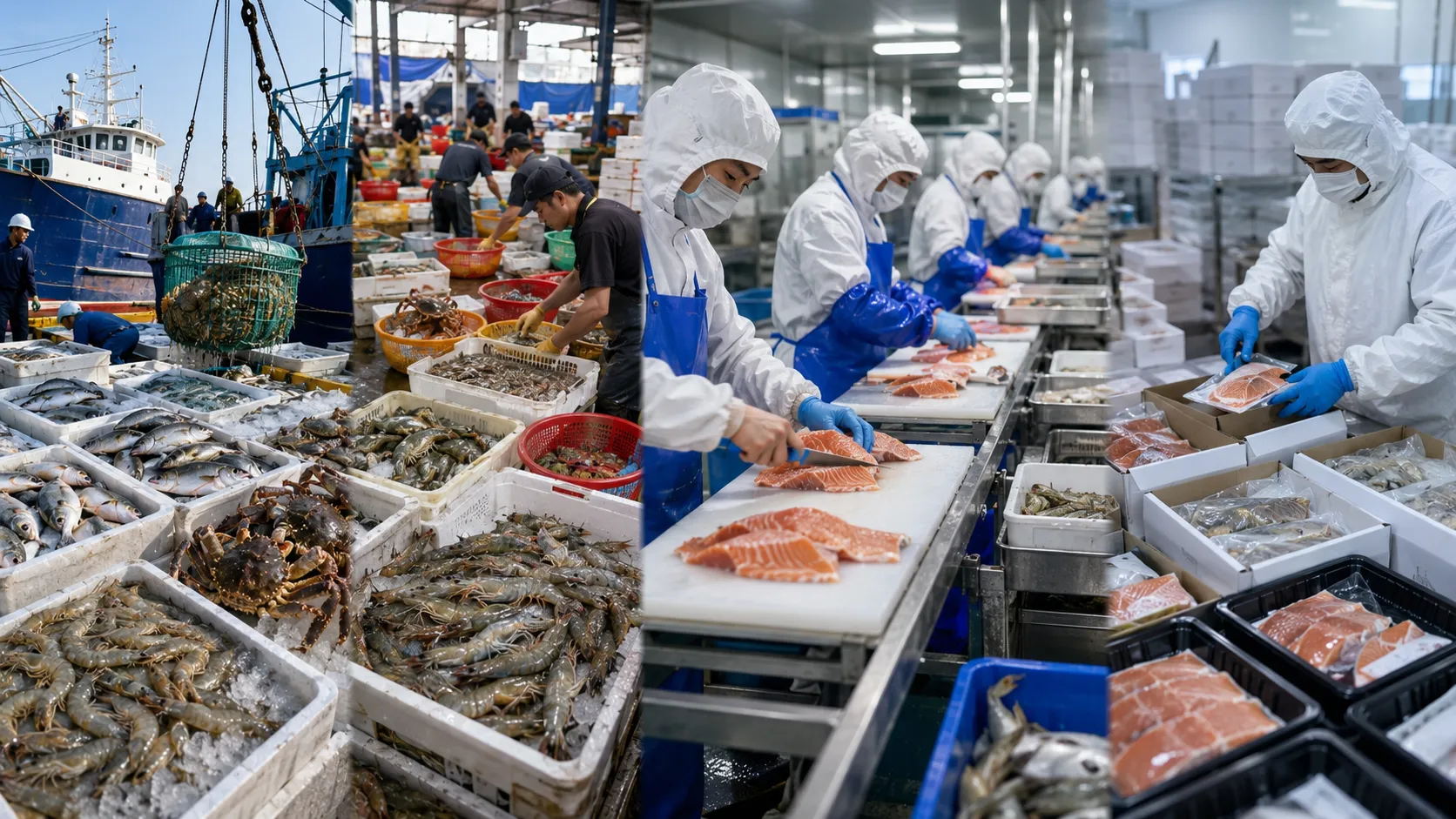
For many B2B seafood buyers, customization does not begin at the cutting table. It begins with choosing the right raw material for the intended market, sales channel and product specification.
A successful customized seafood program connects sourcing, grading, processing, packing and delivery from the beginning. This allows the final product to be designed around real procurement requirements instead of trying to adapt a standard product at the last stage.
Start with the Buyer’s Product Requirement
The first step is to define what the customer actually needs. Important requirements may include seafood species, size range, product form, trimming level, portion size, packaging style, order volume and delivery destination.
Different channels can require very different solutions. A wholesale distributor may prioritize consistent specifications and efficient packing, while a foodservice buyer may focus more on portion control and ease of kitchen preparation.
Raw-Material Selection Affects the Final Product
Once the target specification is clear, sourcing decisions can be made with the final product in mind. Raw-material size, condition and processing suitability all influence the consistency of the finished product.
This is why procurement and processing should not operate as completely separate functions. Better coordination between the two stages helps reduce unnecessary rework and supports a more stable output.
Processing Can Be Built Around the Order
Customized processing may involve sorting, cleaning, trimming, cutting, portioning or other preparation steps according to the buyer’s requirements.
The objective is not simply to offer more processing options. It is to create a repeatable specification that can be followed across orders. Clear production instructions and batch identification help maintain consistency when the same customer places repeat orders.
Packaging and Delivery Complete the Program
The finished seafood product still needs to fit the customer’s receiving and distribution process. Packaging format, label information, carton organization and delivery planning should therefore be considered together with processing.
When sourcing, processing, packaging and cold-chain delivery are coordinated as one supply program, B2B buyers can reduce the number of separate suppliers and communication steps involved in procurement.
A More Integrated Approach to Seafood Supply
For seafood importers, distributors, retailers, foodservice operators and institutional buyers, an integrated supply model can provide more flexibility than purchasing only standard products.
By connecting source procurement with customized processing and cold-chain distribution, suppliers can respond to different product specifications and customer channels while keeping the overall supply process easier to manage.