
Managing Freshness Through the Seafood Cold Chain
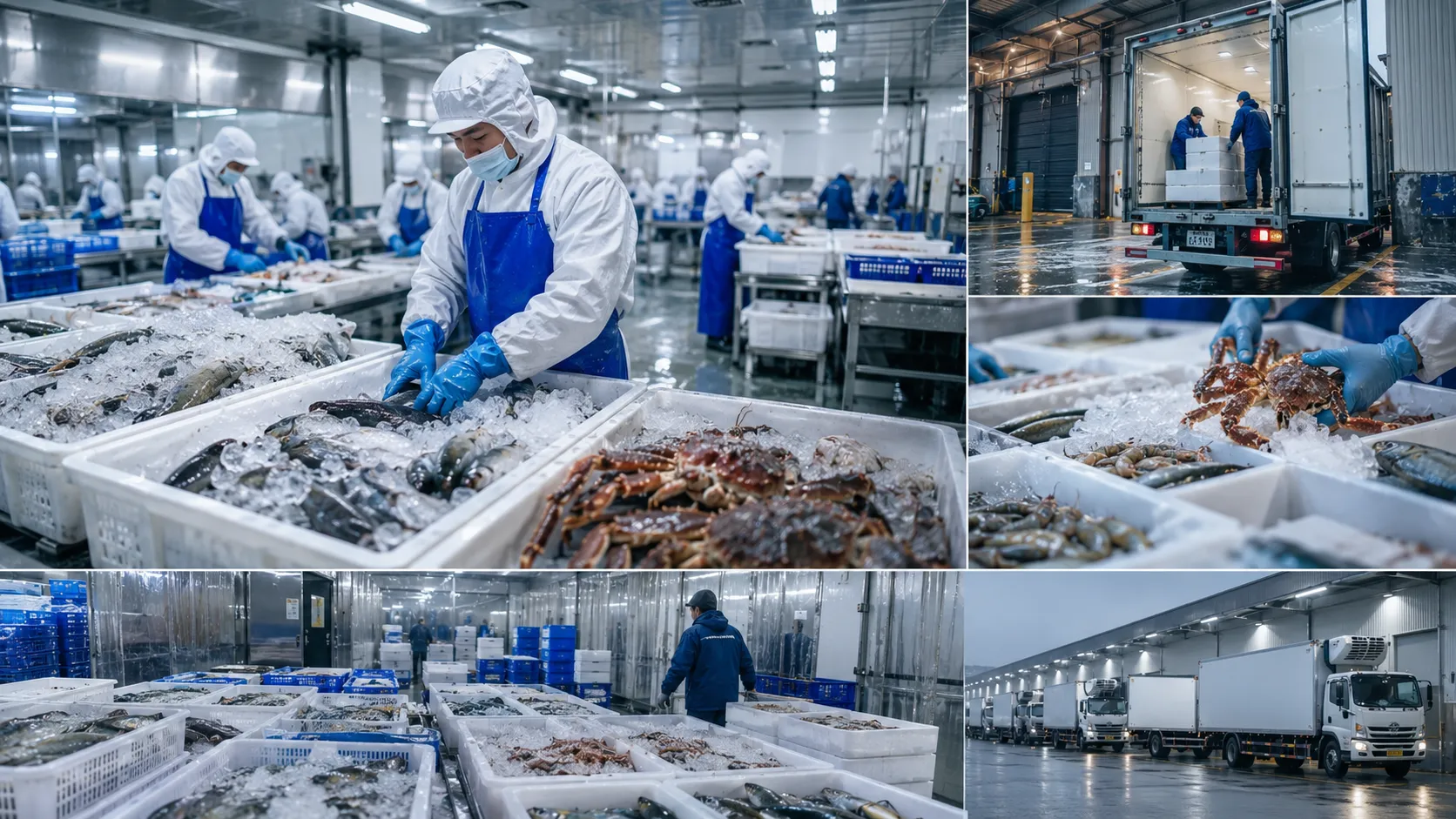
Seafood is highly sensitive to time and handling conditions. Maintaining product quality therefore depends on more than one refrigeration step. From receiving and processing to storage, loading and final delivery, each stage needs to connect smoothly with the next.
For B2B buyers, the reliability of the cold chain can directly affect product condition, delivery consistency and the ability to serve downstream customers.
Receiving and Processing Should Be Coordinated
Cold-chain management starts when seafood is received. Fast receiving, clear product identification and organized transfer into the next handling step help reduce unnecessary exposure and waiting time.
Processing areas also need to coordinate with the storage plan. Sorting, cleaning, cutting, portioning and packing should be arranged so that completed products can move to the appropriate storage or dispatch stage without avoidable delay.
Storage Is More Than Refrigeration
Effective seafood storage requires organization as well as temperature control. Different products, batches, packaging formats and customer orders need to be separated and identified clearly.
This helps warehouse teams locate the correct goods quickly, reduces handling mistakes and makes dispatch preparation more efficient. For B2B supply programs, organized storage can be just as important as storage capacity itself.
Delivery Planning Protects Product Condition
The cold chain continues during loading and transportation. Dispatch timing, route planning, vehicle preparation and customer receiving schedules need to work together.
If products leave storage at the wrong time or wait too long before final receiving, earlier quality-control efforts can be weakened. Coordinated logistics therefore plays an important role in maintaining stable product condition through the final delivery stage.
Cold-Chain Reliability Supports Long-Term Supply
For wholesalers, retailers, restaurants, institutions and other B2B customers, stable supply is often more important than a one-time shipment.
A coordinated cold-chain system helps suppliers respond more consistently to repeat orders, regional distribution requirements and different delivery schedules. When storage and logistics are integrated with sourcing and processing, the seafood supply program becomes easier to manage as a complete service rather than as separate steps.